In a quiet community in Mazabuka, near the Kafue Flats in Zambia’s Southern Province, an exciting transformation has taken root. The community of Itebe, with support from Tweende implementation partners Solidaridad Zambia and the Grassroots Trust, has made the powerful decision to look backward in order to move forward in a way that respects the environment, people, and culture.
Historically characterised by vast grasslands with limited tree cover, Itebe has in the last few decades faced significant challenges due to climate change and poor land management practices. While there are stretches of grassland in every direction one looks, the knowledge of how to care for them sustainably had been lost, leaving the land and the livestock it supported vulnerable to the harsh dry seasons.
Looking Back to Move Forward
The turning point came in 2018, when, with support from Solidaridad and Grassroots Trust, the community decided to re-center the importance of conserving nature on their agenda, focusing on tree and grass regeneration. The goal? For both people and livestock to thrive year-round, with plenty of grazing grass, healthy soils, and thriving herds to supplement household incomes. To support this decision, the community formed a Natural Resource Committee, drew up its own bylaws to control grazing, burning, and cutting trees amongst its members, and got to work. One of the most significant moves was the introduction of, amongst other holistic land management practices, a grazing system that’s not practiced by the tribes of the Southern Province but is prevalent in the west: Kutulisa.
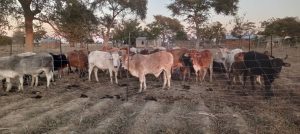
Kutulisa is a traditional ecological practice from the Lozi people of Western Zambia that is a holistic system for managing pasturelands. The practice involves the systematic rotation of livestock across different grazing areas, allowing for periods of rest and regeneration that are important for maintaining soil health and preventing overgrazing.
For Lozis, Kutulisa is far more than a cattle management technique; it’s a key component in an integrated traditional ecological knowledge system that functions through structured governance, with the Litunga and traditional leaders acting as custodians of the land, regulating grazing rights and usage. Its effectiveness is grounded in deeply held social norms and taboos, where myths and oral traditions enforce sustainable practices by embedding them with cultural and spiritual significance. Ideally, this knowledge is traditionally passed on intergenerationally through oral instruction and practical demonstrations, ensuring that sustainable land stewardship is embedded within the culture of the Lozi people.
Building Evidence in Itebe
In Itebe, this traditional wisdom is being used as the foundation of the community’s ecological resilience. Its application there demonstrates how indigenous practices can be effectively integrated into current land management strategies to more holistically fight land degradation and promote climate resilience.
While the community has witnessed the benefits of Kutulisa firsthand, a question still remains: how do we measure the value of this indigenous knowledge and provide evidence of its effectiveness to a society that trusts only data and science?
Tweende, through Grassroots Trust’s Rolf Shenton and Solidaridad Zambia’s Chilekwa Kunda, is conducting scientific trials to prove the benefits of Kutulisa. The idea is simple: to prove that by enclosing cattle overnight on a specific plot of land, their manure and hooves will naturally fertilise and till the soil, creating a potent, chemical-free solution for agroecological holistic livestock and land management.
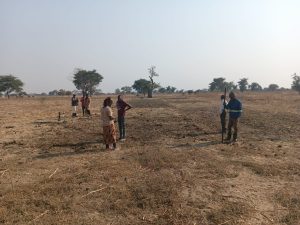
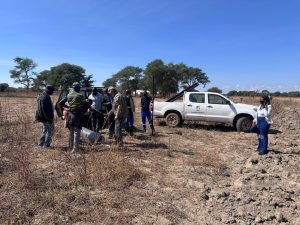
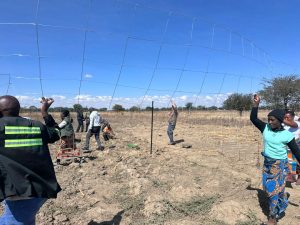
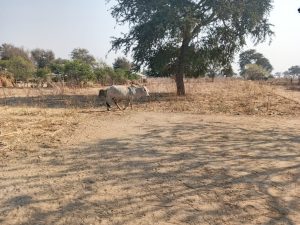

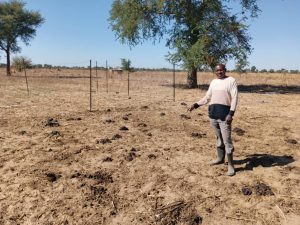
This experiment is designed to validate the traditional logic of Kutulisa. This experiment is designed to validate the traditional logic of Kutulisa. It aims to quantitatively measure the impact of the shifting night-kraals on soil fertility. The research uses replicated trials methodology, with designated plots receiving measured nutrient inputs from livestock, while control plots are retained for comparison. The aim is to generate robust, locally sourced data to find the optimum density and number of nights for the Kafue Flats soils while validating the effectiveness of indigenous practices. This will inform local knowledge and policy and encourage wider adoption.
However, implementing such scientific methodology in a real-world setting has not been without its practical challenges, notably in maintaining consistent trial parameters. These challenges have highlighted for us the intricate relationship between traditional community-based practices and contemporary scientific research methods. Stay tuned to find out how our capable team members from Grassroots, Solidaridad and Mulungushi University resolve this snag!
Voices from the Community
Tweende recently got an opportunity to speak to some of the Itebe community members about their experience of the Kutulisa intervention and how their lives have benefitted from the system being implemented.
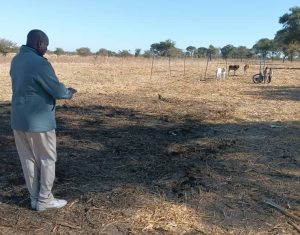
Speaking to Itebe Senior Headman Mr Davies Mweemba (pictured right), it was clear from the very first interaction that the impact has mostly been positive. “We are proud to say that we have revived our grasslands and now even have trees,” he said. “Even the grass from last year, you can still find it there. As we talk, our animals are healthy even this time of the year. There’s food for our livestock. Though it’s dry, it is there.”
Secretary of the Itebe Natural Resource Committee Madam Iredy Munyati echoed Mr Lwindi’s sentiment, emphasising the value of including children in their farming activities in order to ensure the passing on of knowledge: “Our children, when they are not at school, work beside us. We teach them, and they observe and follow what we tell them.”
Far more than “moving cows around”, Kutulisa is a cultural, ecologically sophisticated land management system. Its implementation in Itebe is far more than just about improving grass cover; it’s about changing worldviews and ensuring that humans are seen as active, responsible participants in the health of their ecosystem. The scientific trials we’re undertaking together are not to test if the wisdom is “real” – the proof of that was in the recovering landscapes and proud faces we saw throughout our visit to Itebe. In truth, the trials are merely using a new language (data) to communicate the value of Kutulisa to a broader, modern audience and bridging two powerful knowledge systems for a common goal. And we’re incredibly proud to be part of this journey.