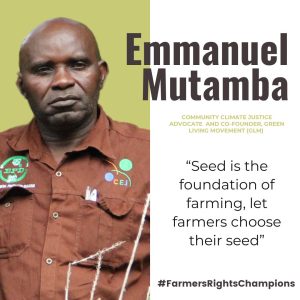
Emmanuel Mutamba, a prominent figure in Zambia’s agricultural landscape, has dedicated his career to advancing sustainable farming practices and advocating for farmers’ rights. As a founding member of the Green Living Movement (GLM) and former leader at the Environmental Conservation Association of Zambia (ECAZ), Emmanuel’s journey embodies a lifelong commitment to environmental stewardship and community empowerment.
In 2010, his pivotal role in spearheading a campaign against GMOs led to the establishment of the Zambia Alliance for Agroecology and Biodiversity (ZAAB), where he served as the inaugural Chairperson of its Board of Directors. With a rich history of activism spanning over two decades, Emmanuel has been instrumental in championing causes ranging from traditional seed preservation to the development of Zambia’s Agroecology strategy, demonstrating unwavering dedication to the welfare of farmers and the environment.
In this interview, he shares his insights on the proposed changes to Zambia’s seed laws and the critical importance of empowering farmers.
How do you believe the proposed changes in the Zambian seed laws will impact farmers, especially those in marginalised areas?
The proposed changes threaten farmers’ rights to seed, particularly in marginalised regions. They risk eroding traditional seed diversity and perpetuating dependence on global seed corporations, jeopardising farmers’ autonomy and livelihoods.
What are the key challenges Zambian farmers currently face regarding access to seeds, and do you think the proposed changes address these challenges?
Farmers struggle with the exorbitant costs of hybrid seeds and associated inputs like fertilisers and herbicides. Unfortunately, the proposed changes fail to address these affordability issues, exacerbating farmers’ challenges.
How do you envision the role of local communities and small-scale farmers in shaping agricultural policies, particularly those related to seed laws?
Local communities and small-scale farmers are primary stakeholders and should be integral to consultative processes. Their voices must lead policy discussions, ensuring that regulations align with their needs and realities.
Can you share an example highlighting the importance of preserving traditional seed varieties in Zambia?
The prevalence of stunted growth among Zambian children underscores the significance of traditional food crops for nutrition. Loss of these crops contributes to poor nutrition, emphasizing the urgency of preserving traditional seed varieties.
What strategies do you think could be effective in ensuring that the proposed changes lead to positive outcomes for both farmers and the agricultural sector?
Advocacy efforts by farmers, coupled with meaningful engagement with policymakers and the establishment of community seed banks, hold promise for promoting positive outcomes for farmers and the agricultural sector.
Are there any specific concerns related to environmental sustainability that you believe should be taken into account in the context of the proposed seed law changes?
The potential introduction of GMOs poses significant environmental risks, underscoring the need to strengthen biosafety laws to safeguard farmers’ rights and environmental integrity.
How can collaboration between the government, NGOs, and the private sector ensure inclusivity and benefit all stakeholders in the agricultural value chain?
Wider consultations and genuine consideration of farmers’ interests and concerns are essential for inclusive policymaking. Collaboration among stakeholders can ensure that agricultural policies reflect the needs of all participants in the value chain.
Are there any success stories or best practices from other regions that Zambia can learn from in implementing seed law reforms?
While not currently aware of specific examples, Zambia can benefit from studying successful seed law reforms in other regions, particularly those that prioritise farmers’ rights and seed sovereignty.