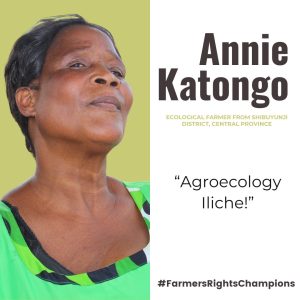
Annie Katongo, from Chilonga village in Shibuyunji district, central Zambia, exemplifies the essence of sustainable farming. Annie has a long history of farming, dating back to 1982, when she started in Mumbwa. She has transitioned from traditional agricultural practices to advocating for eco-friendly alternatives. Annie’s paradigm shift occurred after she became aware of the negative impacts of traditional equipment and pesticides on soil fertility.
Since 2014, she and her husband, a renowned agricultural extension worker, have practiced conservation farming and developed a thriving agroecological strategy based on harmonising with nature’s resources to produce food. Her two-hectare plot is teeming with a broad assortment of organic produce grown with painstaking care, using organic manure and ancient ox-drawn instruments such as rippers and cultivators.
We spoke to Annie about her commitment to sustainable agriculture and how it is an excellent example of how humans and the environment can coexist peacefully.
How do you believe the proposed changes in the Zambian seed laws will impact farmers, especially those in marginalised areas?
The suggested changes look good for farmers who are left out. Since seeds are easy to get before it starts to rain, the community stands to gain from lower production costs and better family economies through seed sales within the community. These seeds are also very cheap and good for you, which means they will help with food security and economic freedom. Still, there are problems, mostly with access and cost, which are made worse by not knowing much about genetically modified plants.
What are the key challenges Zambian farmers currently face regarding access to seeds, and do you think the proposed changes address these challenges?
The biggest problem is that seeds are expensive and hard to get, and there is also a lot of doubt about genetically modified seeds. I think the suggested changes, like using cheap, easy-to-find seeds that are suited to local conditions, could help solve these problems and make food security better.
How do you envision the role of local communities and small-scale farmers in shaping agricultural policies, particularly those related to seed laws?
I think that small farmers and towns should be able to have a say in how policies are made. Agricultural policies can be interpreted and put into action in a way that benefits everyone by continuously raising awareness, improving people’s skills, and involving people at the local level.
Can you share an example highlighting the importance of preserving traditional seed varieties in Zambia?
In the past, I’ve saved traditional seeds from my own crops and given them to other farmers who needed them. Through collaborative programmes, this effort has helped more than 60 farmers, making sure that indigenous seeds and long-term farming methods will be used.
small-scale farms and communities in the process of making policy.
What strategies do you think could be effective in ensuring that the proposed changes lead to positive outcomes for both farmers and the agricultural sector?
I support projects that get groups of people involved, and I want the government to use seed law acts to recognise and certify indigenous seeds. Stakeholders can work together to help small farms and promote sustainable farming by setting up SeedBanks, field days, and national exhibitions.
How can collaboration between the government, NGOs, and the private sector ensure inclusivity and benefit all stakeholders in the agricultural value chain?
To help small-scale farmers and promote sustainable practices, all parties must work together. Promoting policy changes, setting up support systems like SeedBanks, and planning outreach programmes are all important things that must be done to make sure that everyone in the agricultural value chain is included and benefits.