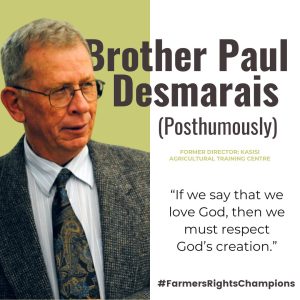
In the realm of sustainable agriculture, few names evoke as much reverence and admiration as Brother Paul. Recently, the agricultural community mourned the loss of this visionary figure whose life’s work transformed farming practices in Zambia and beyond. Brother Paul’s journey from conventional agriculture to championing organic farming is not just a story of personal transformation but also a testament to the power of dedication and innovation in addressing pressing environmental and social challenges.
Brother Paul’s awakening to the ecological pitfalls of conventional agriculture began in the 1990s. Having introduced conventional farming methods to Zambia in the 1970s, he soon realized their detrimental effects on the land and the farmers themselves. Witnessing soil degradation and farmers burdened by debt from costly inputs, Brother Paul recognized the urgent need for a paradigm shift. Inspired by the call to care for our common home in nature, he embarked on a quest for ecologically sound alternatives.
Embracing Organic Farming
Driven by his commitment to sustainability, Brother Paul delved into organic farming. At the Kasisi Agricultural Training Centre (KATC), he spearheaded the development of training programs focused on sustainable organic agriculture. From introductory courses to specialized trainings on pest management and dairy farming, KATC became a hub for empowering farmers with the knowledge and skills needed to thrive in harmony with nature.
Brother Paul’s dedication extended beyond the confines of KATC. Recognizing the importance of outreach, he took training programs to farmers in remote districts, catalyzing a ripple effect of organic farming practices. One notable initiative was KATC’s collaboration with the Seed & Knowledge Initiative (SKI), fostering knowledge sharing and community empowerment in Southern Africa.
In 1999, Brother Paul played a pivotal role in founding the Organic Production & Processing Association of Zambia (OPPAZ), advocating for organic farming principles and supporting local farmers in accessing markets. His advocacy extended to the anti-GMO debate in Zambia, where he stood firm against the introduction of genetically modified organisms, emphasizing the importance of farmer-managed seed systems and biodiversity conservation.
Legacy and Continuity
Brother Paul’s legacy lives on through initiatives like the Agro-Ecology Diploma, a testament to his enduring commitment to education and innovation. Despite his retirement, his influence persists, shaping the next generation of agricultural leaders dedicated to sustainable practices. As KATC prepares to celebrate its golden jubilee, Brother Paul’s absence is felt deeply, but his spirit of resilience and hope continues to guide the journey towards a more sustainable future.
Brother Paul’s journey from conventional agriculture to organic farming exemplifies the power of individual vision and collective action in driving positive change. His legacy serves as a beacon of inspiration for all those striving to cultivate a healthier, more sustainable relationship with the land. As we remember and honor Brother Paul’s contributions, let us reaffirm our commitment to building a more resilient and equitable agricultural future, guided by principles of stewardship and respect for nature.