THE ZAAB NETWORK
ZAAB organisational members and associate partners reach a wide constituency through their own membership base and programme activities that are undertaken across the country. Our network of organisations and affiliated individuals who are in support of sustainable local food systems, ecological justice as well as upholding the Human Rights to adequate food and nutrition levels in Zambia.
Below are profiles of some of the members of the ZAAB network.
ActionAid is a global movement of people working together to further human rights for all and defeat poverty. ActionAid Zambia is part of the ActionAid Global Federation working to achieve social justice, gender equality and poverty eradication. ActionAid Zambia works to advance women's rights and civic participation, engage young people and support farmers to improve their livelihoods. The geographical reach of ActionAid Zambia is operational across the country.
ActionAid Zambia’s vision is a just, equitable and sustainable Zambia in which every person enjoys the right to a life of dignity. Its mission is to achieve social justice, gender equality and poverty eradication by working with people living in poverty, their communities, organizations, activists, social movements and supporters.
ActionAid’s core values are mutual respect, equity and justice, integrity, solidarity with people living in poverty and exclusion, courage of conviction, independence and humility.
Under the Resilient Livelihood and Climate Justice theme, ActionAid Zambia pivot on ecology, climate justice, and interconnectedness of natural resources, resilient livelihoods, food sovereignty and agroecology. Our focus is to identify the threats to women and young people’s food security and livelihoods as well as negative impacts of climate change and resource grabbing as these are critical for building resilience

Empowering rural women to make a difference in Agriculture.
ActionAid Zambia focuses on the following areas:
- Women,
- Politics and economics,
- Land and climate,
- Emergencies and Youths
ActionAid Zambia’s approach in implementing its activities and realizing achievement is centered on: Human Rights Based Approach (HRBA), ActionAid Zambia supports, builds knowledge and skills of collective agencies of Civil Society Organizations (CSOs) that spearhead evidence-based lobbying and advocacy to shift power in the favour the poor and marginalized. This support is in the form of institutional capacity building, sub-granting, coordination and knowledge sharing.
Care for Nature Zambia believes that conserving our environment and its natural resources is both a basic fundamental human right and responsibility of individual children, youths, women, men and the general public and a strategic response to managing Climate Change, and ecosystems.
We believe that collective engagement in Nature Based Actions will help communities to effectively respond to climate change impacts, disasters and get involved in humanitarian response.
CARITAS ZAMBIA is one of seven departments that make up the Catholic Secretariat. CZ is an organisation established by the Catholic Bishops in Zambia in 1984 to animate the work of the Catholic Commission for Justice and Peace as well as the Catholic Commission for Development with the mandate to foster and uphold human dignity through promotion of integral human development. The department aims to improve quality of life for the entire Zambian society, specifically targeting the poor and marginalised, through its core programme areas:
- Organisational Development,
- Democracy and Governance,
- Livelihoods and Climate Change,
- Conflict transformation and Peace building
- Gender Equality,
- HIV/AIDS prevention,
- Sustainable Agricultural,
- emergency response and preparedness.
In the event of natural disasters such as droughts or floods, Caritas Zambia provides support to the affected households through relief and rehabilitation programmes, dispensing the basic necessities such as food, shelter, medicine and hygiene sanitation. Their work also aims to increase the capacity of communities in disaster preparedness and response through training in disaster risk reduction and the creation of community awareness to recognise early warning signs.

Caritas Zambia and its partner Diakonia wrapping up the pilot Climate Justice innovation project in Chilobe and Chilubwa communities in Zimba district.
Advocacy and lobbying work done at national level to raise awareness of the importance of using earnings from the country’s natural resources for social development is a core part of Caritas Zambia’s work. The agency lobbies policymakers to ensure that mining of Zambia’s copper is conducted in a responsible and environmentally sustainable way, and that all Zambians stand to benefit from the use of their country’s natural resources.

Caritas Zambia members of staff attend to participants at a Sustainable Economic Empowerment event
Caritas Zambia’s agriculture and alternative livelihood programmes focus on capacity building for crop dependent communities in small livestock production but also initiatives to empower community members to effectively engage in other economic activities besides farming. Additional activities also include production of cash crops, training initiatives for farmers, harvesting and sale of forest products.
Caritas Zambia also provides technical support to the dioceses to address gender inequalities and the consequences of HIV/AIDS. The agency has developed HIV/AIDS workplace policies and action plans to improve the social well being of women and female-headed households.
CZ Location: Address: Kapingila House,
Kabulonga Road, Plot BRT6, P.O. Box 31965,
Lusaka, Zambia
Telephone: +260 211 260980
Fax: +260 211 260950
Email: caritaszambia@iconnect.zm
Chinchi Wababili a women farmers’ cooperative society was formed in the year 2003 and was officially registered in 2006, and is located in Kafubu Dam West of Ndola .
The objective behind the forming the cooperative was to encourage women to venture in agricultural activities, i.e. livestock and mixed farming.The cooperative initially had only 25 members who have increased now to 60 women, 6 men and 7 youths. Heifer International empowered 25 women with dairy cattle which they passed on to group b. They also keep small livestock eg goats, village chickens etc. They grow different crops using the livestock manure form their animals hence lessening the dependency on Farmer Input Support Programme. They also grow their food using different types indigenous seeds.

The Chinchi Wababili co-operative receiving goats from ZAW
Chinchi Wababili’s network includes: Rural Women Assembly, Esaff Zambia, Alliance of Women Dairy Association of Zambia, WE Forrest and ZAAB.

With beehives from We Forrest
Chinchi Wababili’s focus now is to add value to the produce i.e. dry and preserve some of our crops especially vegetables. Packaging of the honey and find market for the goats. Add value to our milk. Above all Chinchi Wababili’s wish is to learn more on Agroecology and making of organic fertilisers.

Making of green charcoal
The women in the community have been empowered by some of the networks mentioned above and now they are becoming self-reliant especially at home stead level.
Contact: Grace Tepula, +260977612891
Community Technology Development Trust (CTDT) Profile Community Technology Development Trust (CTDT) is a not for profit making NGO registered in 2009 with the objective of contributing to the livelihoods of rural communities through interventions aimed at promoting biodiversity conservation and natural resources management in food production practices. CTDT promotes the management of agrobiodiversity to enhance sustainable livelihoods through intervention strategies aimed at facilitating restoration and enhancement of traditional plant varieties. CTDT strives to enable farmers to own, manage, control and benefit from agrobiodiversity through supporting conservation, restoration and enhancement of local crops. CTDT is actively involved in the areas of agrobiodiversity, household food and nutrition security, climate change, policy advocacy, and gender mainstreaming. It promotes cultivation of wide diversity of crops and varieties in order to contribute to household food and nutrition security. This involves the cultivation of different nutrition crop groups of starch, proteins, minerals and vitamins. This also involves cultivation of a wide range of varieties for each crop.
CTDT’s vision is to have farmers that develop, own, control and conserve biodiversity and are food and nutrition secure, are resilient to climate change, and understand their farmers’ rights.
CTDT seeks to achieve food and nutrition security of marginalized communities through gender sensitive work in biodiversity, agroecology, natural resources and environmental management using research, capacity building, advocacy and partnerships.
- Management and conservation of agrobiodiversity
CTDT promotes the management of agrobiodiversity to enhance sustainable livelihoods through intervention strategies aimed at facilitating restoration and enhancement of traditional plant varieties and animal breeds. CTDT strives to enable farmers to own, manage, control and benefit from agrobiodiversity through supporting conservation, restoration and enhancement of local crops and livestock.
- Addressing household food and nutrition security
CTDT promotes cultivation of wide diversity of crops and varieties in order to contribute to household food and nutrition security needs. This involves the cultivation of different nutrition groups of starch, proteins, minerals and vitamins.
- Climate change mainstreaming
CTDT recognises that changing agricultural and food production in ways that ensure improved sustainability and healthier and more nutritious food supply involves the increased use of agricultural biodiversity which is necessary to adapt to climate change. ϖ Response to seed policy environment CTDT is actively involved in influencing policy on biodiversity through policy engagement, formulation, implementation and capacity building of relevant stakeholders. CTDT engages in policy advocacy and lobbying designed to bring the voice and experience of local communities to the attention of policy makers.
- Gender mainstreaming
Gender is mainstreamed in all CTDT programmes on the appreciation that achieving gender equality requires understanding that every policy, programme, project and development process affects both men and women differently and that specific measures must be designed to eliminate inequalities because they tend to fuel poverty and food insecurity.
Major Achievements
- Reached over 15,000 farmers in capacity building through trainings in climate resilient production, participatory plant breeding, farmer led seed systems, community seed banking, seed multiplication and production and value addition.
- Successful managed a solid collaboration with other stakeholders such as ZARI, ZAAB, Kasisi Agricultural Training College (KATC) and RESCOPE in Zambia
- Successfully established good networks with donor communities and implemented projects with Hivos, Bread for the world, Seed and Knowledge Initiative (SKI), Oxfam Novib and the FAO.
- Successfully established three fully functioning Community Seed Banks in Chirundu, Shibuyunji and Chikankata districts.
Activity Photos

Establishment of community seed banks; Community participating in the construction of the community seed bank in Chikankata District

Workshop to discuss farmer’s rights

Diversity wheel: Communities trained to document diversity in their areas using diversity wheel tool which is used to document levels of diversity of crops, genetic erosion and threats to diversity. They also produce biodiversity registers.

Seed diversity fair in Chikankata PVD field in Chirundu

PVD field in Chirundu
Community Technology Development Trust,
P.O Box 310234,
Lusaka.
+260977441541
Julietnangamba@yahoo.com
EAZ is a Zambian NGO whose head office is in Kabwe District. It was founded in 1989 by Charlene Hewat and Julie Edwards to bridge the environmental sector's gap in order to raise environmental awareness and promote sustainable development. We are dedicated to improving the quality of the environment and people's lives. The work is demand-driven, responding to current needs and issues raised by the public. The approach of environmental action groups, environmental champions, and lead farmers allows for the localization and sustainability of responses to community challenges. We place a high value on the formation of action partnerships. Our vision is a better self-sustaining environment that improves the living standards of current and future generations, and our mission is to champion a self-sustaining environment for all by engaging in proactive, inclusive participatory engagement, education, and action. This is accomplished through strategic focus areas.
- SUSTAINABLE LIVELIHOODS
- ADVOCACY
- ENVIRONEMNTAL EDUCATION AND INFORMATION DESIMINATION
At the core of our focus is the belief that we should leave no one behind when it comes to protecting and preserving the environment. As such, we believe in the active participation of children, youth, and women in all of our activities. Environment Africa Zambia operates in different provinces in Zambia:
Southern Province: Kazungula, Gwembe, Zimba, Sinazongwe and Livingstone.
Central Province: Chisamba, Chibombo and Kabwe.
North Western Province: Solwezi.
Western Province: Sioma.
THE PROJECTS WE DO
Each of the projects we do carries our brand, even if the implementation is in different settings, such as urban or rural. The work we do empowers communities to respond to climate change, improve their sustainable livelihoods, and enhance their resource governance and sustainable environmental management.
Our Identity
We identify as:
A Community
An African environmental and sustainable development movement driven forward by members, volunteers, staff, partners and a demand-led approach from the communities into which we are invited
An Influencer
An influencing agent for all things environmental, we are consulted on issues of policy by the government and best practices to follow by businesses.
A Watchdog
We are an environmental watchdog involved in reaction work, influencing and advocacy, communicating important environmental issues through our media partners as well as the local and environmental and social networks that we belong to.
A Change Agent
Using our programs and projects of action, we offer technical and management support to the efforts of the Government through the community initiatives using a facilitatory process of change and transformation at community level.
Eastern and Southern Africa Small-scale farmer’s Forum (ESAFF) Zambia was established by small-scale farmers in 2003 at the farmer’s convergence held parallel to the World Summit on Sustainable Development (WSSD) in Johannesburg. Participatory Ecological Land Use Management (PELUM) Zambia played a key facilitating role in the establishment of ESAFF Zambia.
The purpose of ESSAF is to enable Small Farmers in Eastern and Southern Africa to speak as a united voice so that issues, concerns and recommendations become an integral part of policies and practices at grassroots levels, National levels as well as at Regional and Global levels. ESSAF is a network of grassroots small scale farmers’ organizations working in 16 countries of Eastern and Southern Africa (EAS) region.
The organization currently has 137 farmer groups in the following provinces: Lusaka, Central, Eastern, Southern, Copperbelt, Northern, Western and North-Western provinces.
ESAFF Zambia’s key activities include; advocating for farmers rights, leading farmers in practicing agroecology and other sustainable methods of agriculture, promoting indigenous/traditional seeds and conducting partner capacity building training for small scale farmers in their areas of operation.

ABOUT FIAN
FIAN International is an International Human Rights Organization that has advocated for the realization of the right to food and nutrition for 30 years. FIAN international Zambia is a National section of Fian International.
VISION
FIAN International envisions a world free from hunger and malnutrition, in which every person fully enjoys all human rights, particularly the human right to adequate food and nutrition, alone, in association with others, or as a community, in dignity and self-determination. In pursuit of this vision, FIAN International's mission is to contribute throughout the world to the implemen tation of the provisions of the International Bill of Human Rights and other relevant human rights documents by working for the respect, protection and fulfilment - defined as facilitation, promotion and provision - of the human right to adequate food and nutrition of persons or groups threatened by or suffering from hunger and malnutrition.
MISSION
FIAN exposes and addresses violations of people’s right to adequate food wherever they may occur. We stand up against unjust and oppressive practices that prevent people from feeding themselves and their families. The struggle against gender discrimination and other forms of exclusion is an integral part of our mission. We strive to secure p
Green Living Movement is a Zambian NGO working in sustainable development, community empowerment and natural resource management through community participation. GLM was founded in 2000 by a group of Zambian environmental and social development enthusiasts who were worried about the lack of environmental awareness and its links to poverty. GLM Zambia is the mother organisation of GLM Finland and Swaziland.

Green Living Movement launching the Community-based Strategies for Sustainable Natural Resources Management and Gender Equality project! The project will enhance natural resource management for climate resilience and secure livelihoods for the communities of Monze and Mazabuka districts from 2021-2024.

GLM’s global vision is a sustainable environment and livelihoods in a poverty-free society. GLM has adopted the philosophy of a Chinese revolutionary, Dr James Yen, as a guiding principle:
“Unless you enter the den, you cannot get the cubs. Go into the community, live humbly with the people as one of them, learn from them, plan with them, start with what they know and build on what they have.”
GLM’s work focuses on rural communities. It strengthens the capacity and knowledge of the local communities to enable them to become managers of their own processes. GLM staff and volunteers from many parts of the world spend a substantial amount of time living, learning, sharing and planning with communities.
It also supports the environmental and social development of rural communities. The primary aim is to improve community livelihoods in an environmentally sustainable manner. Yet, the organisation also uses a holistic approach, since a combination of interventions is often needed to respond to the immense development needs in the rural areas.
GLM has always used participatory and people-centred working methods. The aim is to provide the local people with skills and knowledge which enable them to influence the development of their own livelihoods and the broader community. Partner communities take part in the entire project cycle from project identification and planning to implementation and evaluation.
P.O. Box 38254, Showgrounds, stand# 2374,
Lusaka, Zambia (corner of Mpelembe and Chongwe walk)
Landline: +260 211 256 136
Mobile: +260 977 891 826
Email: glmglobal.zambia@gmail.com
Kasisi Agricultural Training Centre is adjacent to the Kasisi Jesuit Mission located 10 km from Kenneth Kaunda International airport. KATC is an apostolate of the Society of Jesus, Zambia and Malawi Province. It was established in 1974 by Brother Paul Desmarais and it’s main aim is to assist in sustainable rural development with smallholder farmers. In the late 1980's KATC observed that conventional agriculture was degrading the land and impoverishing the farmers. By 1995 KATC was training smallholder farmers, the government and NGO extension staff in Sustainable Organic Agriculture and other related short courses, both residential and as part of an extension programme mainly in the districts of Chongwe and Rufunsa.
With support of local and international NGOs, KATC has also trained farmers from all provinces of Zambia and more recently has been training Ministry of Agriculture (MOA) officers as well as the government research institutes and agricultural training centre staff in sustainable organic agriculture, including demonstration plots which have tended to outshine the large seed company demo's, especially in drought years.

Eunice Hambulo KATC Extension officer facilitating a discussion at a field day hosted by Mr. and Mrs Sikombe, Sinjela Camp in Rufunsa District.
KATC's production has been organically certified by ECOCERT since about 2001, initially including smallholder farmer cooperatives in Chongwe which later separated from KATC as the Chongwe Organic Producers & Processors Association (CHOPPA). In 2018 KATC started
supplying organic certified processed products such as rolled oats and wheat flour to the market, including Shoprite.

A lead farmer explaining the concept of agroforestry nursery management.
KATC has participated in advocacy at every opportunity to promote the ecological organic approach with government agencies and policy makers. Its large scale production and market access also promotes the fact that organic is possible on a large scale. KATC was one of the founding members of ZAAB in 2010 initially motivated by the need to fight against the renewed efforts of mainly the corporate sector to bring GMOs to Zambia.
KATC has benefited greatly from their partnership with the Seed and Knowledge Initiative (SKI) to take the Agroecology agenda to the point now that KATC will be starting to offer an Agroecology diploma from 2021. Above all, the partnership has greatly benefited and empowered smallholder farmers in 6 camps (3 in Rufunsa and 3 in Chongwe) through valuing smallholder knowledge and traditional seed management systems in an agroecological context. KATC itself has greatly enhanced their own knowledge of agroecology through their partnership with the SKI SADC region partners.

Group discussions; sharing gender experience during the KATC SKI farmer representatives gender and seed training facilitated by CTDT
In 2018 KATC was invited by SKI to have some of their staff trained in the making of biofertilizers and then to host a 2-week training in biofertilizers. 70 people attended including 50 farmers. This training inspired many farmers to implement the making of biofertilizers with locally sourced ingredients and train their fellow farmers.
Kasisi Agricultural Training Centre, PO. Box 30652,
Lusaka, Zambia.
Email: katc@iconnect.zm
Tel: +260-211-840303,
+260-965840303
Kitwe District Land Alliance (KDLA) is a consortium of Non-Governmental Organizations (NGOs) dedicated to advocating for improved land policies and laws for the benefit of local communities. With a collective interest in land issues, our member organizations implement various programs and activities within their respective areas of focus.
Background:
KDLA is a vital component of the District Land Alliances (DLA) network, operating under the umbrella of the Zambia Land Alliance (ZLA). Established in 1999, ZLA has successfully facilitated the creation of District Land Alliances across the nation. KDLA emerged in October 2007 in response to pressing land challenges and disputes within the district. Recognizing the necessity for concerted efforts, KDLA was formed through collaborative efforts of member organizations with support from ZLA.
Our Mission:
KDLA serves as a platform for collective action, committed to promoting equitable access and secure ownership of land by rural and urban poor communities. Through lobbying, advocacy, networking, research, and community partnerships, we strive to empower marginalized groups and ensure sustainable land use.
Vision:
We envision a district where rural and urban poor communities have secured access, ownership, and control of land for sustainable development.
Strategic Objectives:
- Lobby and advocate for inclusive policies, laws, and administrative systems that address the needs of land-dependent rural and urban poor.
- Research critical land-related issues and promote sustainable land use practices.
- Foster networking and collaboration with national, regional, and international bodies to exchange experiences and address land issues.
- Provide legal services to address land-related disputes and ensure access to justice.
Activities:
- Coordinating member and partner NGOs' land advocacy programs.
- Raising awareness on land issues, including gender, HIV/AIDS, and the environment.
- Collecting and disseminating information on land-related issues in Zambia.
- Advocating and lobbying for accountable and transparent land administrative systems.
- Establishing and building the capacity of community-based organizations.
- Advocating for pro-poor land issues at the grassroots level.
- Publishing land disputes and advocating for land reforms to influence policies and administrative systems.
- Networking with government bodies, cooperating partners, NGOs, CBOs, FBOs, and communities to advocate for fair land reforms.
- Creating climate awareness initiatives.
- Promoting local participation in land governance processes.
Operational Areas:
Our primary focus areas include Bulaya and Mashisha villages under Chief Nkana, Chieftainess Shimukunami's area, Luela (Twalima), Kakolo C, and Mukuba communities in Kitwe. Additionally, we extend our presence to Misaka in Kitwe, Fisenge in Luanshya, Chieftainess Lesa in Mpongwe, and the broader Copperbelt province through radio programs and the provision of paralegal services.
Loctaguna Organics- The good food farm.
Inspired by nature and science, Loctaguna Organics is an ecological organic farm practicing mixed organic agriculture aimed at making accessible and affordable organic food to all in Zambia. The business model incorporates production and sale of organic food products through various outlets. The farm also offer training for those wanting to convert to organics or learn how to farm.
Loctaguna's production systems adhere strictly to the principles of health for all, harnessing the ecosystem and fairness to everything and everyone.
Contact: kanangwanewlove@gmail.com

Like many other countries, Zambia has not been spared of environmental degradation and the effects of the climate crisis. Zambian communities face a number of environmental problems and with an ever-increasing population, these challenges are also increasing. Mizu Eco-Care seeks to be a leading platform for mindset change and a paradigm shift towards environmental sustainability.
What we do
- Attaining Environmental Sustainability in various local communities through Environmental Education with a specific focus on mindset change.
- Implementing Environmental Education programmes to deal with wildlife conservation and sustenance of biodiversity.
- Implementing social welfare programmes for vulnerable people (especially children and women) and people with disabilities in local communities.
- Empowering youths with green entrepreneurial skills for the purpose of economic survival.
- Telling of environmental stories through documentary production and social media platforms
Mukaka Dairy Co-operative is based and has its reach in Mumbwa district of Central Province. MDC is involved in rearing animals, producing milk and traditional and agroecological farming activities. They are also engaged in various entrepreneurship activities for small scale farmers. MDC has hosted a number of indigenous/traditional seed fairs, the latest being last year in Mumbwa.

Knowledge and sharing on various indigenous seeds at the Mumbwa Seed Fair organized by Mukaka Dairy Co-operative and ZAAB in Mumbwa town last year
Contact person: Mrs Mary Sakala, +260977254773
The Rural Women’s Assembly (RWA) is a self-organized network or alliance of national rural women’s movements, assemblies, grassroots organisations and chapters of mixed peasant unions, federations and movements across eight countries in the SADC region.

Over a period of four years, we have gathered together poor, rural women into regional Rural Women’s Assemblies; into international platforms coinciding with major multilateral events, such as COP 17 and Rio +20; and into regional lobbying processes that have run parallel to SADC meetings, as well.
National chapters of the RWA have also organized their own lobbying events and activities to coincide with important national meetings, summits and on international days, such as International Rural Women’s Day and International Women’s Day.
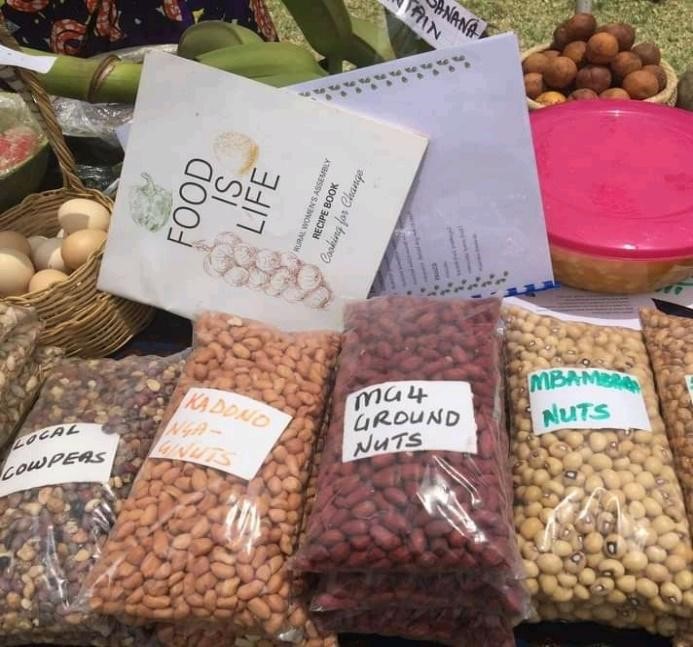
Rural Women’s assembly has committed to protecting and promoting the continued shrinking base for indigenous seed in the areas of operation. Works with and empowers women so they should be part of the development agenda in rural parts of operation.

Permaculture work started in Zimbabwe in 1988 with the establishment of Fambidzanai Permaculture Centre. In 1994 the Ministry of Education in Zimbabwe launched the SCOPE Programme of Zimbabwe in partnership with the Zimbabwe Institute of Permaculture. People from the neighbouring countries who visited SCOPE Zimbabwe were so impressed by the performance of these schools that they requested the SCOPE Programme to share their experiences with other countries. This led to a regional meeting in December 2006 that was held at Barn Motel in Lusaka, Zambia and was attended by representatives from South Africa, Malawi, Kenya, Uganda, Zambia and Zimbabwe. The outcome of the meeting was the launch of ReSCOPE Programme whose offices were set up in Malawi in May 2007. In 2014, SCOPE Kenya and SCOPE Uganda chapters were founded, followed by SCOPE Malawi and SCOPE Zambia in 2015 and 2016 respectively.
Since registration Scope Zambia have managed to recruit 16 Member Organisations. We have a seven-member Board which has developed the following policies for the organization: Finance, Gender, Board Charter, Code of conduct, Human resources and Child protection. We have also developed a strategic plan and some learning materials on seed saving and multiplication. We are members of the Zambia Alliance for Agroecology and Biodiversity (ZAAB) in which we hold the position of Treasurer. Our Member Organisations have participated in implementing the ReSCOPE project which ends in June 2021.
Scope Zambia’s mission is to assist schools, colleges and communities to live in abundance using their whole land creatively to produce a diverse range of nutritious food and other useful products; providing countless learning possibilities; contributing to community resilience and to the development of the whole person.
Its strategic objectives are; to develop demonstration centres of sustainable land use in pilot schools in a participatory and integrated way, to strengthen SCOPE Zambia as a network supporting its members deepening their practice and to improve the sustainability of SCOPE Zambia and its members and serve as models of resilience for the target communities and other beneficiaries.

Rocket stove using fewer sticks of wood in Malimba school
The Schools and Colleges Permaculture (SCOPE) Programme uses schools as an entry into communities and getting the parents, teachers and learners carrying the relevant messages. The ReSCOPE Programme has developed tools such as the Integrated Land Use Design (ILUD) process which school communities are using to redesign their school grounds into multi-functional landscapes that include food forests. SCOPE works through local organisations which provide back up and monitoring support to the participating schools while developing their capacity to use the tools that are facilitated by SCOPE.
C/O Agribusiness Forum,
Plot number 100/655 Ibex hill extension, Box 30833 Lusaka, Zambia
Mobile: +260 977770034
Website: http://www.seedingschools.org/
Email: lskprogramme.scope@gmail.com, annie@seedingschools.org/scopezambia2018@gmail.com
The Zambian Governance Foundation for Civil Society (ZGF) started operations in 2009 to amplify the role of civil society in pro-poor policy engagement. This encompassed broadening access to capacity enhancement resources, empowering marginalised individuals for effective government engagement, and increasing accountability.
In 2017, ZGF underwent a transformative shift towards community philanthropy. This evolution turned ZGF from a dedicated civil society support organisation into one directly involved with communities and CSOs. The organisation operates on three pillars: supporting CSOs, strengthening communities, and building the field of philanthropy. ZGF’s mission is to strengthen local communities and civil society capacities to unlock and utilise available and untapped resources for sustainable development.
Active in 18 communities in Lusaka, and rural communities in Chisamba, Chibombo, Rufunsa, and Luangwa districts, ZGF works to facilitate community-led development. Over the past 14 years, it has supported almost 200 organisations, fostering relationships with around 400 CSOs. Engaged in various projects, including environmental sustainability initiatives such as the Alliance for a Lead-Free Kabwe or the Halt Mining in the Lower Zambezi National Park campaign, ZGF actively contributes to sustainable development in Zambia. It is also a member of the Zambia Alliance for Agroecology and Biodiversity (ZAAB), the Africa Philanthropy Network (APN), Civicus, and the #ShiftthePower movement.
Our website: www.zgf.org.zm
Zambia Land Alliance is a network of Non-Governmental Organizations (NGOs) advocating for fair land policies, laws and administrative systems that take into consideration the interests of the poor and marginalized. The Alliance was founded in 1997 and operates through a National office, seven (07) national members, eight (08) District Land Alliances (DLAs) and two (02) district project offices. Each DLA has its own member network at district level.
ZLA’s vision is to see a Zambia in which the rural, peri-urban and urban poor and vulnerable communities have secured access, ownership and control over land for sustainable development. The organizations’ mission is to be a platform for collective action committed to promoting equitable access, control and secured ownership of land and related natural resources by the poor and marginalized, through lobbying and advocacy, networking, research and community partnership.
ZLA employs capacity building as a strategy for improving performance at all levels of the organisation. Capacity building is also included in developing the capacity of Community Land Advocacy Committees (CLACs) to be an effective interface between ZLA and communities.
Through Sensitization and Awareness ZLA employs various approaches such as mass media, social media, study circles and focus group discussions. The basic premise of sensitization and community awareness raising is that there is insufficient knowledge by the citizens to make informed decisions on what to do with respect to security of land tenure, sustainable land use, livelihoods and environmental protection.

ZLA Women’s Land Rights Advocacy in Nyimba District
Lobbying and advocacy are important strategies for ZLA to ensure laws and policies are appropriate for improved security, ownership and land use for sustainable livelihoods. Evidence based advocacy is a vital strategy in influencing policy changes, and information gathered at different levels, through research and implementation of the strategy is used as an evidence base for advocacy activities. Advocacy structures such as CLACs and National Land Advocacy Committees are used for engaging duty bearers and policy makers on policy change. Lobbying and advocacy approaches also involve media advocacy, policy analysis and presentation of position papers, parliamentary submissions, engaging influential persons such as chiefs, use of social media such as Facebook, and social accountability, which includes information campaigns and participatory planning.
ZLA recognises that it cannot achieve its objectives without working with other like-minded organisations, sharing best practices and creating a critical mass needed for lobby and advocacy. This strategy is applied at the sub-district level through the traditional leadership and the Ward Development Committees, at the district level through the District Development Coordinating Committee (DDCC) and at the national level through the Sector Advisory Committees (SAC).
Paralegal Officers and District Coordinators provide legal awareness and advice on land rights, mediate land-related disputes among community members, follow up cases and make referrals to relevant institutions, where necessary. The DCs work with CLACs in the documentation and field follow-ups on cases. The paralegal support leads to increased knowledge of land rights, and enhanced access to conflict resolution mechanisms and justice. Documentation of land rights cases also contributes to generation of documentary evidence for advocacy interventions at various levels.
ZLA develops materials containing land-related information which are distributed in various formats and channels to different stakeholders for advocacy interventions and decision making. These resources are distributed to communities, districts and are accessible on the ZLA website, social media platforms and library.
Community Land Advocacy Committees (CLACs) are the basic operational structures of ZLA at community level, where the work is spearheaded by community members through the CLACs. The CLACs have proved to be an effective link between the communities and ZLA as they report to district branches, which in turn report to the National Secretariat. CLACs also participate in local governance structures (e.g. Ward Development Committees and Village Councils). They also support in the documentation and follow up of cases, and community sensitization. These volunteer community structures are responsible for mobilizing communities for activities, lobbying and advocacy at community level, overseeing study circle groups, sharing land related information and liaising with district branches on land-related matters happening in their communities.
The CLACs have developed the ability to handle minor land disputes with assistance from paralegal officers based at the District branches/project offices. Because CLACs are community structures, they are critical for sustainability of the interventions beyond the life of ZLA projects in the communities. The need to ensure security of tenure is an important element of the administration of customary land in Zambia. ZLA promotes Customary Land Holding Certificates in a number of provinces where they are supported through the District offices. The Customary Land Holding Certificate (CLHC) is a document which is issued by a Chief. This document certifies possession to a particular piece of land but is not a title deed, and cannot be used as a basis of land tenure conversion. However, these certificates have proved to be effective in reducing land ownership conflicts and boundary disputes. The certificates have also helped to secure land for the next of kin such as a spouse in the event of death of the head of household.
A study circle is a small group of 8 to 16 adults with a common goal to learn. They meet to share ideas which provide an opportunity to learn new ideas, improve their skills and increase their personal development. They meet on a regular basis and participate voluntarily in a democratic environment. Zambia Land Alliance provides the Study Circles with study materials and technical support, based on the needs of the individual groups. The Study Circles are used as a means of addressing land-related issues. The organisers ensure that the study groups meet to learn and share experiences using the study circle manual, a tool developed specifically for this interaction.
Plot No 126E Kudu Road
Kabulonga, Lusaka Zambia

SHARE
seeds and knowledge

ACT
together for a just, sustainable future

GROW
healthy communities
JOIN OUR NETWORK
Organizations and individuals seeking participation in ZAAB are expected to actively embrace and champion ZAAB's objectives, goals, and principles within your respective spheres of influence.
In return, as ZAAB members, you will gain a national platform to advance collective efforts in promoting agroecology and advocating for human rights concerning adequate food and nutrition, all within the context of social and ecological justice. Membership offers valuable opportunities for networking, knowledge sharing, skill development, engagement in collaborative advocacy and research initiatives, as well as access to ZAAB's research, information, and publications
ZAAB offers three distinct membership categories: Core Membership, Associate Membership, and Individual Membership.
- Core Membership: Core members are required to be established, active Zambian organizations or networks that share a common vision with ZAAB. Their objectives must align with the promotion of agroecology, food sovereignty, and environmental and social justice, consistent with ZAAB's vision and goals. Core members actively engage in implementing ZAAB's activities, objectives, and contribute to its institutional growth.
- Associate Membership: Associate members comprise organizations, whether based within or outside Zambia, that wish to support the Alliance's work but do not meet the criteria for Core Membership.
- Individual Membership: Individuals who embrace and uphold ZAAB's values and principles are welcome as Individual Members. They support ZAAB's initiatives to the best of their abilities and relevant skills, participating in Alliance activities. Individual members are not restricted by geographic location and can be from any part of the world
Download application guidelines here and the application form here.