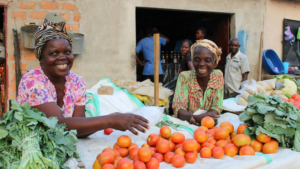
A tomato is not a complicated thing to grow. It is, however, a difficult thing to grow well without chemicals in Zambia.
This is largely due to one pest: Tuta absoluta. The tomato leaf-miner arrived on our turf around 2016 and has since become the defining nightmare for local tomato producers. A household survey conducted in 2018 across Zambia and Kenya (400 farmers in Kenya and 426 in Zambia) found that, among Zambian respondents, 97.9% named it as the main problem they face with tomato crops. Most had lost a large share of their harvest to it, with the mean seasonal production loss for Zambia estimated at 10,700 tonnes (worth about US$8.7 million then).
Farmers responded the way farmers do when a pest threatens their income: they sprayed. Pesticides became the predominant control method, used by 97.6% of Zambian farmers surveyed. And they sprayed often, with nearly 34% applying between six and ten sprays in a season and another 29% applying one to five times. For many, that is a spray every week or two, from transplanting to harvest.
And the costs add up. Pesticides and application accounted for nearly a quarter of a tomato grower’s expenses in the Zambian study. The average household spent about US$42 on pesticides against Tuta absoluta alone, and the returns are not a sure thing – only 17.2% of Zambian farmers said their pesticide treatments were “very successful”. The pest has developed resistance to many of the chemicals used against it, pushing farmers to increase dosages, often without training or protective gear.
This was the backdrop to this year’s Farmers’ and Practitioners in Agroecology Conference, held in Chongwe in late September under the theme “Pesticides: The Poison in Our Food”. The event brought farmers, researchers and youth leaders into the same room, and Joseph Mwale from SCOPE Zambia opened by reminding participants that food should nourish us, not harm us. Mr Mwale emphasised that farmers, especially women, need to keep conserving indigenous seeds that do not require toxic pesticides as they are well adapted to local pests and diseases.
During the discussions, a practical gap was highlighted: most agro-shops sell chemicals but do not stock personal protective equipment. A young farmer on the panel described what happened after he sprayed: a severe headache and clothes that kept stinking even after washing. Farmers on the panel also spoke about the peer pressure to produce uniform, “perfect” produce for the market, free of the leaf miners that devastate tomato crops – leading to indiscriminate chemical use.
So the chemical load is high and the market does not reward farmers for reducing it. In fact, it rewards them for the opposite.
And the issue goes beyond Zambia’s borders. Research on tomato marketing in Uganda found a striking consumer preference. As one summary of qualitative findings put it: “Customers in the market shun pesticides without pesticide residues; they demand those with residues because they believe they are healthy and last longer.” Another participant in that Ugandan study noted that the residues “are both on top and inside, preserving the tomatoes and reducing losses.” Farmers there described delaying harvest by spraying tomatoes to keep them on the plant longer until prices improve and, in some cases, overdosing to meet customer demand for storage life.
While there is no equivalent published study for Zambia that we could find, the dynamic is familiar enough to anyone who has bought tomatoes in a Zambian market. The market selects the tomatoes that carry the most residue because residue is read as durability. A tomato that looks perfect and sits on a shelf or in the market for a week is a tomato that has been managed chemically, often aggressively. But a tomato that bruises and softens quickly is harder to sell, even if it was grown with fewer inputs.
The health consequences are not abstract. A study of tomato samples from markets in Chinsali district, Zambia, found that 90% were contaminated with malathion residues, and 43% exceeded the recommended maximum residue limit. A separate assessment in Monze district detected residues in 63.3% of tested samples, with some tomato samples exceeding Codex limits. At the conference, ZEMA mentioned that of the 54 highly hazardous pesticides registered in Zambia, 19 are banned or highly restricted. And chemical residues have been found in blood, breast milk, liver and vegetables in Zambia, with 2.6% of poisoning cases in the country linked to these chemicals.
Consumers are foolish. We are responding to what we can see. Residue on a tomato is invisible unless it leaves a stain, but shelf life is visible. A household that buys tomatoes for the week has a rational interest in produce that will not rot by Wednesday. The problem is that the signal the market sends – “buy tomatoes that lasts” – is the same signal that encourages heavier spraying.
At the conference, everyone was appalled and ready to take action. A young farmer on the panel challenged the room: “We are no longer the future leaders; we are the leaders of now. So if things have to change, they will have to start with me and the other youths.” But he added a condition: “Youth will come on board, but they need information; they need knowledge.”
By the end of the conference, we had set out recommendations for our various sector actors. We called out to the government to ban highly hazardous pesticides with a phase-out plan, repurpose subsidies toward bio-pesticides and organic fertilisers, and decentralise research and extension. We asked farmers to use Neem, Tithonia, garlic and chilli, to try pheromone traps, and to organise into cooperatives for knowledge sharing. All of this matters. But the tomato on the market stall matters too. How do we ensure that the tomato that was grown with fewer chemicals can survive the trip to market? How do we stop the preference for residue-stained produce from pulling farmers back toward the sprayer?
Food for thought.
References
Mwanja, M., Jacobs, C., Mbewe, A. R., & Munyinda, N. S. (2017). Assessment of pesticide residue levels among locally produced fruits and vegetables in Monze district, Zambia. International Journal of Food Contamination, 4(11). https://doi.org/10.1186/s40550-017-0056-8
Mwansa, B. (2017). Malathion residues on selected fresh vegetables produced by small scale farmers of Chinsali district, Muchinga province, Zambia [Master’s dissertation, The University of Zambia]. UNZA Institutional Repository. https://dspace.unza.zm/handle/123456789/6150
Rwomushana, I., Beale, T., Chipabika, G., Day, R., Gonzalez-Moreno, P., Lamontagne-Godwin, J., Makale, F., Pratt, C., & Tambo, J. (2019). Tomato leafminer (Tuta absoluta): Impacts and coping strategies for Africa (CABI Working Paper 12). CABI. (Survey conducted in 2018 across Kenya and Zambia; 400 Kenyan and 426 Zambian farmers.) https://www.cabi.org/Uploads/CABI/about-us/Scientists%20output/WP12_tuta_evidence_note.pdf
Sekaboija, D., Atuhaire, A., Nabankema, V., Sekimpi, D., & Jörs, E. (2024). Consumer risk perception towards pesticide-stained tomatoes in Uganda. PLOS ONE. https://doi.org/10.1371/journal.pone.0247740